Because Girlhood Movies Don’t Have to Be Feel-Good “Mother-Daughter”-Type Films
Updated: Aug 7
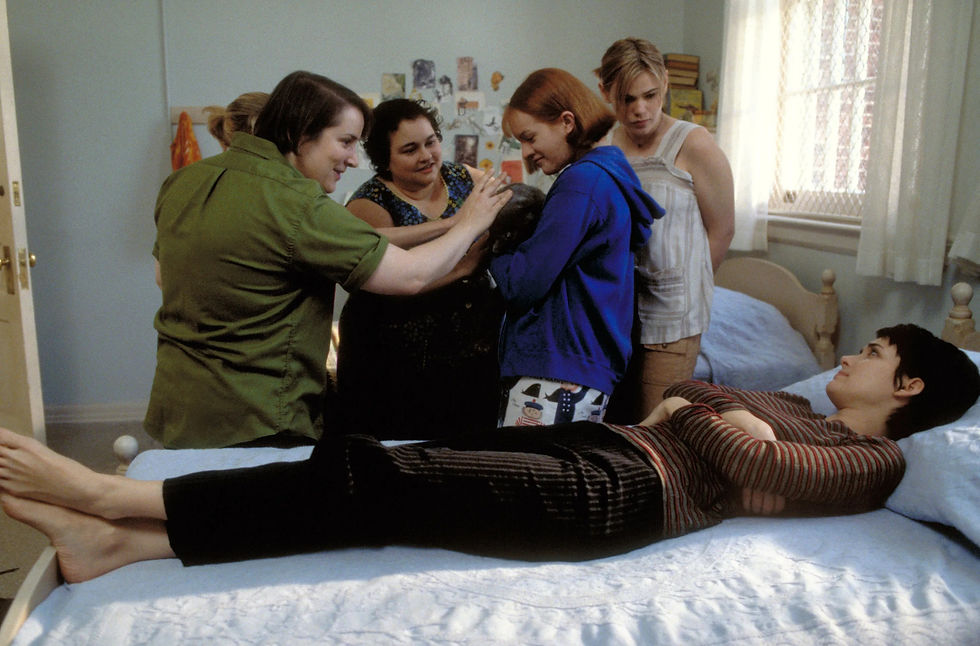
During the post-Y2K era, it’s become less stigmatizing to discuss mental health. Thanks to stars like Selena Gomez and Billie Eilish, as well as organizations like NAMI, and the National Suicide Prevention Lifeline mental health has become, if anything, the issue du jour of the 2010s and early 2020s. Unfortunately, back in the 1960s, it wasn’t always so. It was either “you’re nuts or you aren’t- there is no such thing as “high functioning” mental illness.” Back in 1993, Susanna Kaysen, a writer with borderline personality disorder wrote about being a victim of such treatment- thus, we got Girl, Interrupted, a poignant book about, well, just that, which was adapted into a film six years later, in 1999.
The film follows Susanna Kaysen, a young woman who finds herself in an institution thanks to her mental illness- and one frequented by famous people, no less! She grapples with her mind daily, and her doctor calls her out on her various behaviors, like being promiscuous- so much for being the era of free love! (She’s not even that promiscuous, and even calls out the supposed double standard about that.) Along the way, she meets Lisa, a seductive sociopath, and Daisy, an insecure young woman with a Hairspray-style hairdo and a fixation on her dear father’s rotisserie chickens. She eventually must decide between her newfound social circle, and going out into the “real world.” Suffice to say, Lisa is quite the bad influence on her, encouraging her to run away so that the two for them could go to Disneyland so she could be Cinderella. Yes, really.
Is it any good? Well, it’s certainly a chilling account of mental illness in a time when it was far more stigmatizing. Her restraints, outbursts, and crazy behavior is shown in stark detail. Granted, the fact that these girls are all played by gorgeous actresses (Brittany Murphy, Winona Ryder, and of course Angelina Jolie- in fact this is the film that made her a household name) may look as though it’s glamorising mental illness, but all of these girls do a fantastic job it’s easy to overlook. (And really, it’s Hollywood, what did you expect, anyway?) Angelina Jolie was even nominated for an Academy Award for Best Supporting Actress (which is odd considering she doesn’t really support Susanna in this film- at least not conventionally) at 24 no less! Moreover, given her repertoire, it’s easy to see Winona Ryder in a role that makes her “strange and unusual!” Another drawback is that, some aspects of the film deviate from the source material, which Susanna Kaysen understandably complained about, such as making a side character a butch lesbian when she was straight in the source material. But for the most part, it does a good job of conveying its message- the 60s may have been the era of iconoclast behavior, but you were only allowed to be so unusual and different before you were ostracized.
In short, this was a downright amazing portrayal of mental illness. This is truly a must for mental health advocates. 4 stars out of 5.
Jennifer Rose is an autistic author and novelist whose work explores identity, imagination, and what it means to think differently in a world built for everyone else. Her novel Manimal Crackers draws on her own experience as an autistic writer to tell a story about impulsivity, mentorship, and finding your footing. She is also the author of It's Not a Perfect World, But I'll Take It (Skyhorse Publishing), a memoir in fifty life lessons about growing up autistic. Jennifer is currently developing a literary magazine, Autonomy, for autistic writers and readers.


Comments